Impact Mentorship 7 - A fly on the wall
I’ve been working for Story Money Impact for about 6 months now, but I recently got to sit in on the Impact Mentorship sessions as a semi-participatory fly on the wall. It was such an honour to get to watch Tamo Campos (The Klabona Keepers, The Radicals, A Last Stand For Lelu, Northern Grease) in action. He’s a gentle and thoughtful facilitator with a ton of interesting experience in the impact sector.
Tamo posed a fun question to start the group off: What’s the most influential documentary film you’ve ever seen? And (importantly), what was the setting in which you saw it? If we were to have an Impact Mentorship 7 Film Festival featuring all of the named films, it would look something like this:
→ Fix: The Story of an Addicted City (2002)
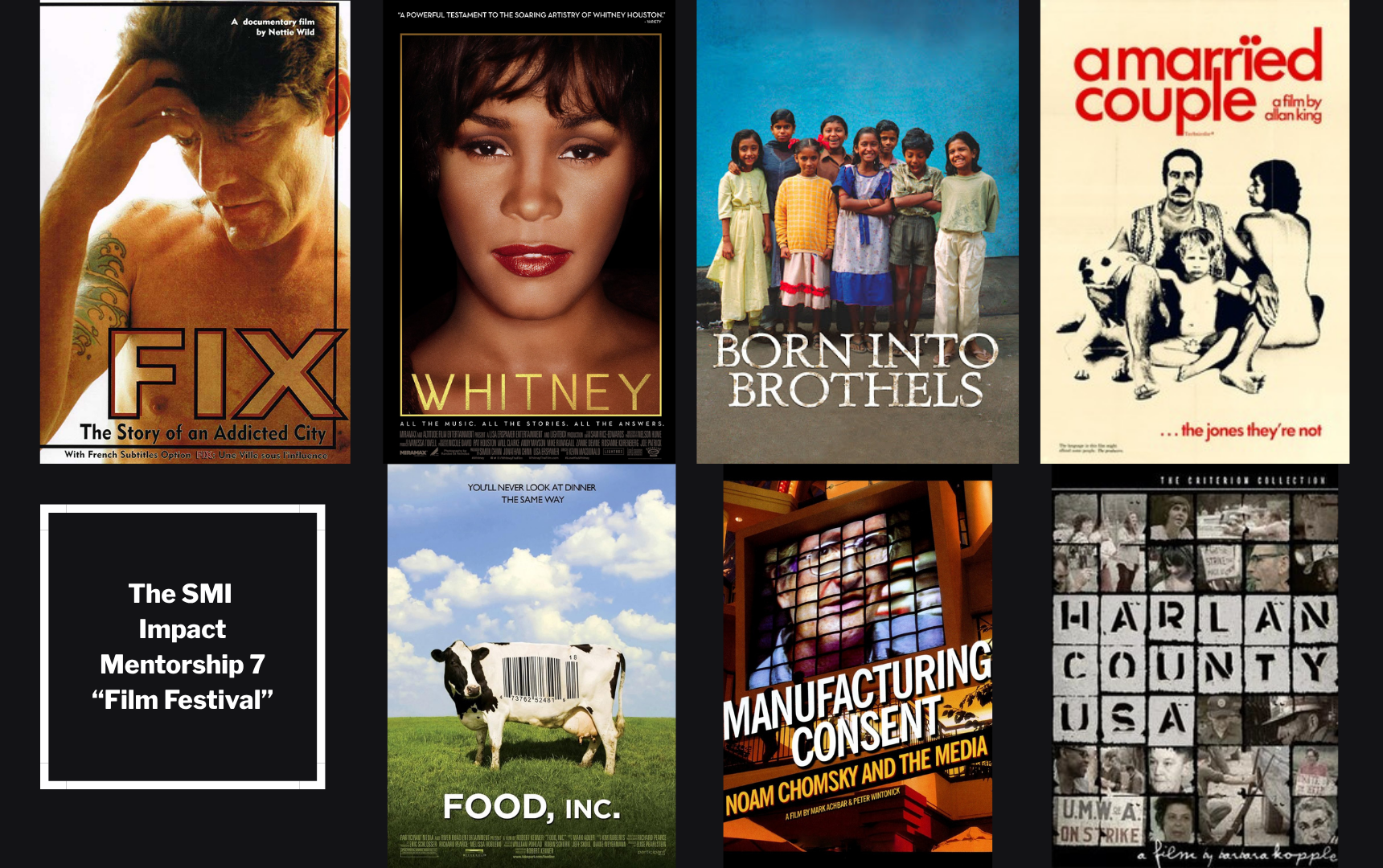
Notably, some of us had watched these films alone at home and some of us had watched them in cinemas with friends. Some were watched while in university, others later in our adult lives. When I think of my answer, I realize that the context in which I watched the film (in a cinema in university followed by hanging out with friends) meant I had space to digest and process some of the film’s themes with others, which probably went a long way toward making it such a memorable film.
Later, when each of the Impact Mentees were sharing what their projects were all about, something struck me. All three of the projects in this edition touch on family dynamics in different ways. I suppose that is the structure (or lack of structure) we are all most easily connected to, so in some ways it forms the most relatable context for exploring new ideas and stories. I keep thinking about how much bravery and vulnerability it takes for documentary participants to step in front of the camera and share their stories, and it’s heartening to be a witness to a container for the filmmakers’ thoughtful approaches to their craft.
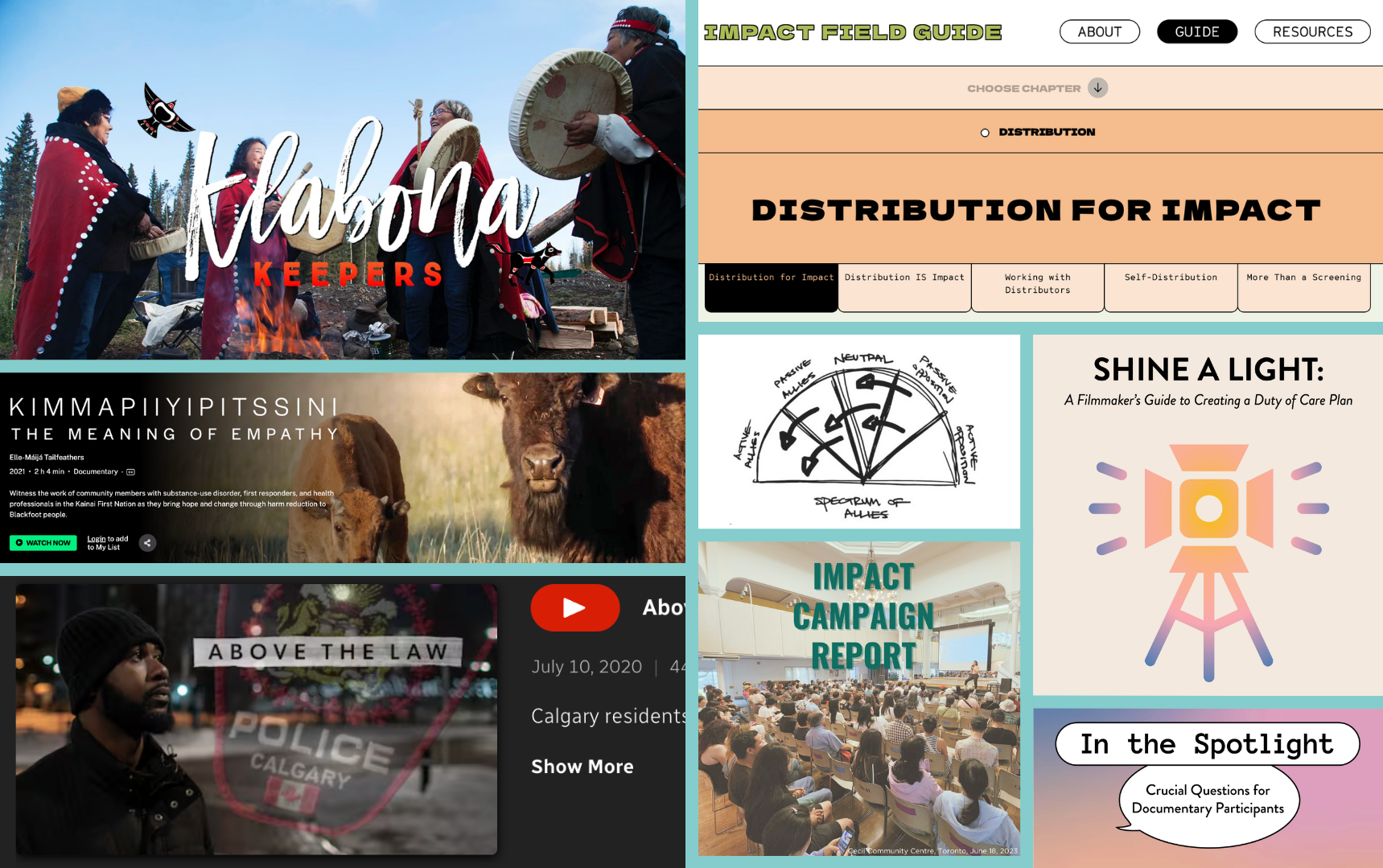
Over the next four sessions, we covered a lot of ground. We dove deep into case studies of films such as No Visible Trauma (a shorter version of which is called Above the Law and is available to watch on CBC Gem), The Klabona Keepers, and Kímmapiiyipitssini: The Meaning of Empathy. We talked about our responsibilities toward our project participants in the context of Duty of Care, especially with respect to how vulnerable our participants might be to harm brought on by their participation. We talked about relationality and relationships and responsibilities that extend beyond the signing of appearance releases.
We talked about the Spectrum of Allies, which really impacted me. I was especially moved by the notion that we can free ourselves from being concerned about our work’s impact on active opponents and instead focus on eliciting change among those who fit in the other categories; passive opponents, neutral, passive allies, especially in collaboration with active allies. So, within the context of the issues explored in one’s film, the spectrum of allies can be a powerful tool to catalyze change in the film’s subject area.
Mostly, I took away a deep appreciation for how much benefit this type of exploration can inform the design of a documentary project while still in development or even within production. By earnestly asking yourself questions like “who is my film for?” and then drilling down further into questions like “who am I accountable to?”, “what are the issues/problems/injustices highlighted?”, “how can this film serve the issue it explores?” and finally, “how can this film inspire audience members?”, you can strengthen the integrity of your project and clarify its story … and its impact.
Thank you to the Impact Mentorship 7 cohort and to facilitator Tamo for a wonderful program! Sincere thanks also to the Impact Mentorship’s funders: Telefilm Canada and Story Money Impact donors.